If you don’t live in Biryulyovo yourself, it will be much easier to understand the reasons behind yesterday’s events if you go here. This is "Wikimapia," a site where users comment on various geographic locations.
So, the comments: 2 years ago: all in all, this place has become a gigantic problem — the depot is crawling with illegal migrants, many of them live in the neighborhood and at night make a living by robbing people. Places like this need much stricter oversight and should be moved outside Moscow! 2 years ago: Yes, by the way, I also remember school safety lessons about ammonia at the vegetable depot (I studied at School No. 1242 too)... There really are lots of illegal migrants there, but it seems to me that if this depot suddenly disappeared, the number of illegal migrants would hardly decrease that noticeably, since they work in many areas of Biryulyovo’s small-business sector, which is pretty alarming from a sanitary and hygiene standpoint. Though of course the least civilized among them (the ones sleeping rough near the vacant lot 600 meters east) would leave or move to another district where there’s something like "Cherkizon" (the former Cherkizovsky Market). 2 years ago: well, besides monitoring the depot, the authorities need to keep an eye on the housing stock too — WHO actually lives in Biryulyovo’s apartment buildings, and how many people are packed into each apartment. but so far nobody cares, it’s a source of income for officials 5 months ago: well, that’s it, the district is finished. a cesspit until 2042. the only hope is a radical change of power, and in Russia that seems entirely possible 5 months ago: An extraordinary breeding ground. A source of unsanitary conditions and illegal migrants. Resellers come for goods even from neighboring regions. It’s gotten to the point where Vietnamese citizens buy as many vegetables as can fit on a couple of hand carts, then haul them onto packed suburban trains on the Kursk line (the Krasny Stroitel platform is nearby) and try to sell the goods. Speaking as a resident of Maryino, excuse me, it’s perfectly clear to me what’s going on there. I’ve got the same thing nearby — the "Sadovod market," where most of "Cherkizon" moved after it closed, a strange territory not controlled by the authorities, and it shows in everything: from the permanent traffic jam caused by improperly parked cars to, of course, hordes of legal and illegal migrants, who live there too in nightmarish conditions. Those who couldn’t find space at the market rent apartments in nearby buildings, where they live in groups of 20. From there they also make forays into neighboring districts: they’re not going to starve if they can’t find work. They can snatch a handbag near the metro, or pull a knife on someone in an elevator and rob them.
Even the non-criminal but entirely predictable consequences of a high concentration of migrants — like 50% of the children in nearby schools not speaking Russian — obviously do not delight the "native" residents. Naturally, a place that is a nightmare for local residents is a wonderful Field of Miracles (a popular Russian TV game show, used here ironically) for the police, the FSB, the district administration, and the prefecture. Cash is delivered there by the suitcase. Here’s the latest flare-up: More than a thousand people detained at Moscow’s Sadovod market. So what? Did they shut down "Sadovod"? Deport those thousand people? Disqualify any of the "entrepreneur-slaveowners"?
No, of course not — they paid the police bosses 1,000 rubles (about $10 at the time) per person, brought money to their "curators" in City Hall and the FSB, and everything goes on. Any resident of the Lyublino district will tell you exactly the same thing about the "Moskva" shopping center, for example. You have to understand: the more misery a place of compact migrant settlement brings into the lives of local residents, the more the security services and local authorities can earn there. That is the law. Everyone knows: a criminal ghetto has been created there, people from it commit crimes with impunity because they pay bribes to the authorities. The authorities are for them and against us. That is also the law. No justice can be obtained either in court or from the police. And that is the law. It was against these well-known laws of Moscow and Russia that the residents of Biryulyovo rose up yesterday, trying to organize vigilante reprisals out of anger, helplessness, and the understanding that "if there’s no uproar, nobody will pay attention". The context of the crime — he stood up for a girl, and got a knife in the back — pushed emotions to the limit. So now people can say any nonsense they like about extremist incitement, about rampant nationalism, and so on. Everyone understands everything. If there is no fair system for resolving conflicts and problems, people will create one themselves, in a primitive and spontaneous way. That is to be expected: after all, they’re the ones being killed. *Look at what the "law enforcement system" has turned into: a) OMON riot police dispersing protests, b) the Investigative Committee fabricating politically motivated criminal cases not just on an assembly line, but as its sole occupation, c) the FSB, whose leadership is occupied exclusively with finding jobs for their children in state-owned banks. This whole system devours a third of the budget — and is useless. By number of police per capita, Russia is a super-champion.
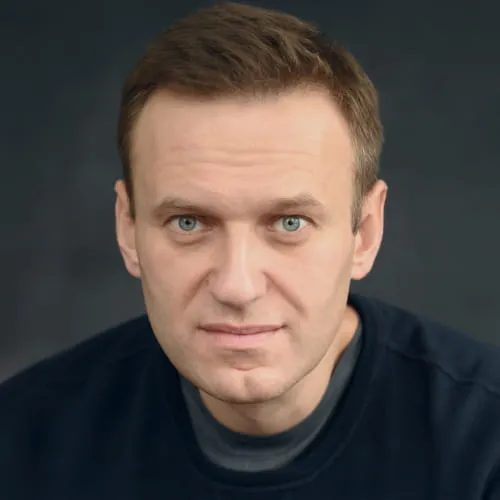
http://www.bloomberg.com/visual-data/best-and-worst/most-heavily-policed-countries But ask anyone, whether in Biryulyovo or on Rublyovka (Moscow’s elite suburban enclave): can the law enforcement system catch criminals? The answer is obvious. I’m writing this post right now while sitting in yet another court hearing, where we are appealing the opening of a bogus criminal case against the "Navalny Brothers." The investigative team has 12 people, including several senior investigators for especially important cases. Attached to the team is a brigade of FSB operatives carrying out searches, seizures, wiretaps, and so on across the entire country. If even a quarter of these resources had been used to find the killer of 25-year-old Yegor Shcherbakov, murdered in Biryulyovo (at least after efforts had already begun to organize a "people’s gathering"), there would have been no riots. Until Russia carries out law enforcement reform and court reform that create the conditions for their independent professional work, events like those in Biryulyovo will keep recurring. That is fundamental point number one. Fundamental point number two. Here is the main culprit behind the unrest in Biryulyovo:
It is precisely this figure, imagining himself a builder of empires, who keeps spouting absurd nonsense about how introducing visas with the countries of Central Asia and the South Caucasus would "push the former Soviet republics away from us." At a press conference following the APEC summit, Russian President Vladimir Putin put an end, at least for the near future, to the question of introducing a visa regime with a number of CIS countries. "A visa regime within the CIS would mean pushing the former republics of the Soviet Union away from us. We need not to push them away, but to draw them closer," Interfax quotes Putin as saying. http://www.newsru.com/finance/08oct2013/migrputin.html 84% of citizens want this visa regime introduced. It is a demand shared by the whole population. A normal, civilized measure used in all developed countries. Paradoxically, those very "illegal migrants" everyone writes about simply do not exist. They are all legal. There is no visa regime, and people can enter and leave Russia even without an international passport. Russia needs a clear and coherent policy in this area: 1) we aim to reduce the number of migrants, 2) we introduce visa regimes, 3) we implement a strategy to raise labor productivity, 4) only highly qualified specialists are allowed to enter freely, 5) we do everything possible to prevent the emergence of ethnic ghettos (like at this vegetable depot). Unfortunately, it is easy to predict that we will hear nothing from the authorities now except another round of empty talk, where the lack of substance will be compensated for with words like "tough," "immediate," and "decisive." How can one not quote again the message from five months ago in the vegetable depot’s description: the only hope is a radical change of power. PS Do you want to state your political position clearly on the need to introduce a visa regime with the countries of Central Asia and the South Caucasus? Then support the bill drafted by the Anti-Corruption Foundation.