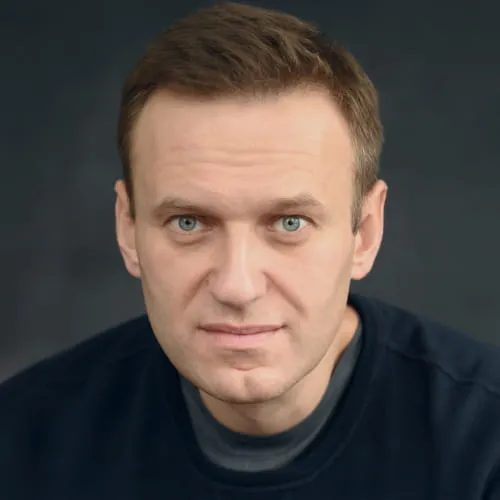
Navalny at 20:18. Broadcast #013. Nemtsov, Turovsky, Strelkov, medal-winning students, and Krasnoyarsk deputies
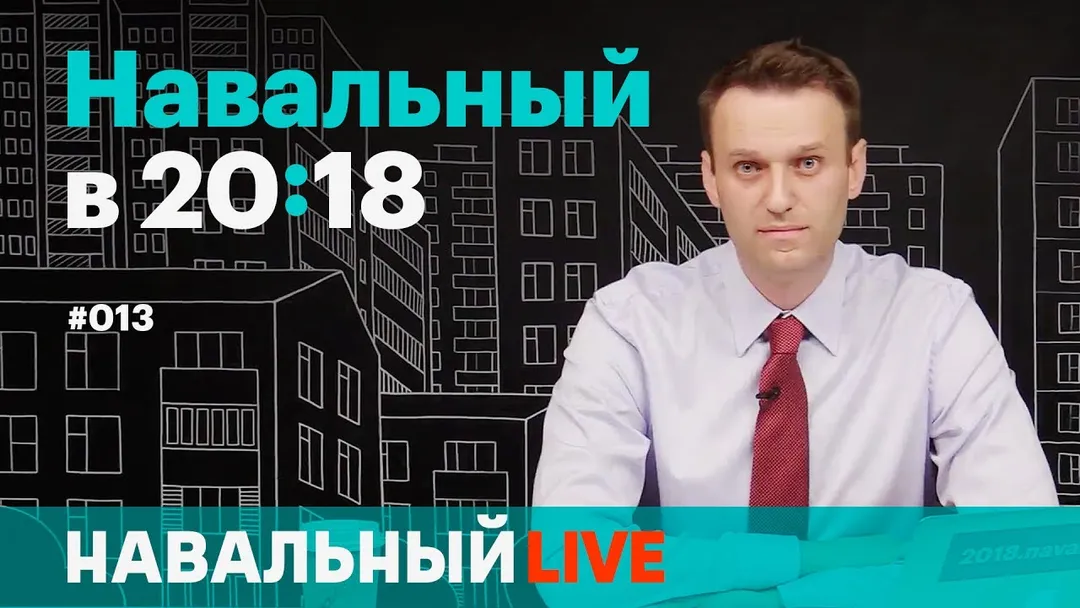
[music]
Hello everyone in Moscow.
20:18 That means I’m here in the studio.
Alexei Navalny, and at long last I’ve
ended up back here after
a four-week, well, forced absence.
Thank you very much to everyone
on the FBK team (Anti-Corruption Foundation) who hosted these broadcasts
instead of me. Thank you very much to all of you who
watched those broadcasts. Thank you very much to everyone
who’s watching now. I hope I’ll be able
either to tell you something
interesting or answer some
questions you care about. That’s what
our programs are for. You can
send those questions using the hashtag Navalny2018
and ask them on Twitter. A lot of people have been asking me
about how my time in the
special detention center went. So, those 25 days—
25 days is longer than 15 days. That’s
the main thing
I realized during that time: 10 days
go by very quickly, almost unnoticed.
After 15 days, it starts to get a little old. But
with 25 days, you just keep thinking constantly,
“My God, this is taking forever.” But at exactly that
moment, you think about those people
who are locked up for years. And I don’t have to look far—
my brother has been imprisoned for 2.5 years,
two of them in solitary confinement, and immediately
that feeling disappears. In any
case, one way or another, the authorities have decided
that at every rally
they’ll arrest not only me but also
FBK staff, not to mention
ordinary random people. So
interruptions like this in our program may
happen. But I hope you’ll treat that
with understanding.
One more amusing fact about my detention center stay: I
was locked up with a celebrity this time.
The celebrity in the detention center was the famous Mara
Baghdasaryan, and that’s when I really
understood, guys, what
real fame is. I was
in the detention center and was kind of the most
well-known guy there. People asked me for
autographs and so on. Then Mara arrives,
Baghdasaryan, and my star set
instantly. If maybe
50 or 60 percent know me, then literally
everyone knows her—absolutely everyone, all the Russian
migrants, Tajiks, anybody at all knows her
and knows her exploits well. So
television really is a powerful thing. Once again I
was convinced how easy it is
to turn someone into a celebrity. Though,
to be fair, she’s actually a fairly modest
young woman in person. We sort of chatted
a little through the bars
when there was a chance—when she was out
for a walk or I was out for a walk. Today we have
several topics with you today
that I wanted to discuss, and since
I’ve been flooded first and foremost with questions
about my debate with Igor Strelkov and about
that, I’ll say more a bit later. But I decided
to try holding a poll during this broadcast.
Look, right now in your
left or right—
right, they’re prompting me—in the right corner
of the screen, a little icon should appear, and
if you click it, a poll will pop up
about whether I was right
to agree to debate Strelkov
or whether I was wrong. For now we’ll discuss
some other topics, and then I’ll
try to answer that
in great detail. But I’m genuinely very interested in
your opinion, so please
vote, and we’ll see what you’ve
voted for. But the main topic
of today is, of course, the verdict for the
murderers of Nemtsov (Boris Nemtsov, Russian opposition politician),
the murderers of Nemtsov—but not the organizers
of Nemtsov’s killing, and certainly not the people who ordered
Nemtsov’s murder. I’ve said here before, and I can
repeat it again, that this trial,
despite the fact that the man who
pulled the trigger got 20 years today,
which is not much, really, because we remember that
Oleg Sentsov got 20 years for an alleged attempt to set fire to
a United Russia office, which I don’t think
even happened—it was all fabricated too—
and here the man who
directly shot Nemtsov
also got 20 years. The others got
various shorter sentences, and still I’m
not satisfied, despite that. I’m not satisfied with
the course of this trial, nor with
the investigation at all, because neither
the people who ordered it nor the organizers even
appeared in the courtroom. There is an
opinion that, well, at least this is something, because
at least the actual shooter
was imprisoned—20 years, fine,
let it be so. But as for me, it would have been better if
the shooter had escaped responsibility
and was somewhere on the run, while the people who ordered it and
the organizers were sitting on the
defendants’ bench and received those sentences. But look,
just let’s remember—let’s once again
take in what exactly the court of the Russian
Federation, the court of the Russian Federation, decided with this
verdict. It decided that there was this
Ruslan Mukhutdinov, who is currently
on the run—he was not convicted of anything—
who is the driver
for Geremeyev, one of Kadyrov’s
relatives—that is, a police-driver, and
this police-driver organized everything.
His salary was, what, 35,000 rubles a month (about $600 at the time),
at most, and yet he spent—
and this is not my speculation right now, this is
the official court ruling, what’s written
in the verdict—he spent 15 million rubles (about $250,000 at the time)
on preparations. He rented several
apartments in Moscow over the course of several
Over the course of several months, he bought several cars.
For several months, he
organized surveillance of Nemtsov, and all of it
was done by him—he came up with all of this and
carried it out—just some driver, supposedly, and
the system of the Interior Ministry
of Internal Affairs. Do you believe that? I
categorically refuse to believe it. And
that is precisely why the results of this
trial—the verdict—do not satisfy me.
Because I understand—I mean, I think you
and everyone else understand that
an ordinary driver could not have organized all of this.
We understand that Geremeyev
his direct employer and
supervisor, at the very least,
Yereyev was directly involved in all of this.
And we can see from the case materials that
he and the shooter were constantly
moving around together, flying together, uh,
riding in the same cars,
and so on and so forth. But
for some reason, the investigation showed very little
interest in this figure. One of, probably,
the most shameful chapters, generally, in
Russian justice, and specifically in this case. One
of the most horrifying episodes
was how FSB officers
explained to the jury, the prosecutors, and
the broader public why, exactly,
Yereyev
did not even appear in court. They said, well,
there was, yes, an order issued for
his arrest, for him to be brought in. They said, but
we went to Chechnya, knocked on the door,
and no one answered. So we
turned around and left.
Well, I have several times been inside
apartments like that, where
FSB officers, Interior Ministry officers, or investigators from the
Investigative Committee wanted to get in. You know, not once have I seen
a situation where they knocked, I did not open the door, and
they just left. Every single time, they cut through the door, and
every single time, a whole crowd of OMON riot police ran in,
along with all kinds of force support and everything else.
Every time they needed
to put me under surveillance, it was so intense
that even my children noticed it: “Dad,
why is that car always following us?”
But with Yereyev, you see, the
FSB officers somehow ‘couldn’t manage it.’ Well, how
could they not manage it? They ‘couldn’t’ for
a very simple reason. I do not know,
and I cannot say for certain whether
Vladimir Putin gave a direct order to kill
Nemtsov. But the fact that Putin personally and
directly
gave instructions to ensure that in this trial
Kadyrov, Geremeyev, and the real masterminds
of this murder would avoid punishment and would not even
end up in court—that I am one hundred percent certain of. I cannot
imagine how, in any other way,
the Investigative Committee,
the FSB, and the prosecutor’s office could have developed such
a selective blindness, you know. Here
they see one part of the picture, while another
part they completely fail to notice, paying no
attention to the fact that an ordinary driver simply does not have
15 million rubles (about US$250,000 at the time). They write, yes,
he spent 15 million rubles (about US$250,000 at the time). They do not want to see
any of this, they do not want to notice it, and
of course this is a direct instruction from Putin—not
from Zolotov, not from some—I do not know—nor
from Prosecutor General Chaika, nor from Bastrykin. I am
absolutely convinced that Putin personally
bears responsibility now for the fact that
the organizers and masterminds of Nemtsov’s murder
have escaped accountability. For now, unfortunately,
that is the case. And unfortunately, this is
the kind of fact that probably lends support to
the conspiracy theory that he
may have been involved in the murder itself. I
still do not think that is the case.
I hope it is not. It seems to me that
Kadyrov and the rest of that crowd
more likely misinterpreted some of his
phrases or wishes or something else
of that sort—something like, “Come on, guys,
good job, you’re fighting the opposition.” They
thought, well, probably he wants us
to kill someone here, and they chose
Nemtsov. I assume that is how it happened. But
in any case, the court did nothing to investigate
any of this, and the investigation itself
was conducted outrageously badly.
Despite the fact that the best investigators
were working on it—which, by the way,
perfectly characterizes the entire
Russian law enforcement system: if
this is what the best investigators did,
what can we expect from ordinary
investigators?
So yes, that is why I believe that in this
trial, in this disgusting and
shameful verdict, Putin
Debates, debates, debates, debates—I’ll talk
about the debates. Guys, ask me
some other questions for now. And the second
topic I wanted to discuss, which we
were dealing with all day today, is
the situation with Alexander Turovsky, our
volunteer. Since June, he had already been a staff member
at the headquarters—a wonderful, excellent guy
whom we have known for several years. He
worked as a volunteer for a long time and only
started receiving a salary at headquarters in June, just
like the small number of people who, in general, in
our headquarters—at our Moscow headquarters, I think
about 10 people receive a salary, while
we have 17,000 volunteers. In a typical
regional headquarters, two people receive
a salary. Turovsky worked there and was
an excellent guy, a very reliable person. And
today we had a meeting at the FBK (Anti-Corruption Foundation). We
were discussing various things, and suddenly someone
said, “Hey, take a look at
Turovsky’s post.” Of course, for us that had
the effect of a bombshell and a shock.
Because—please put the text on screen.
Alexander wrote a post that, well,
looks quite strange. It’s basically about
how, essentially, no one helped him during
this difficult—really difficult—
situation, when police officers
knocked him down right at night at our headquarters, and so
he is disappointed, and very deeply disappointed in me personally,
disappointed, and from now on he
is no longer with us.
Why did this shock absolutely all of us?
And why, honestly speaking, we actually
didn’t believe at first that he had written it.
Although later he confirmed to certain
media outlets, and we still
believe that he apparently wrote that post under
some kind of pressure, or because of
extraordinary circumstances about which
we also very much want to protect him, but we
just need to get in touch with him. Because
Alexander was in this studio the day before, on
Lyubov Sobol’s program *Cactus*, and on
Monday he was—someone is prompting me—and
basically
he was firmly determined to continue
working. Sobol asked him whether everything
was all right, whether he needed help. He said
everything was fine. I myself called him as soon as I
got out of the special detention center, I called him before the
court hearing.
And I asked whether everything was all right with him, whether he needed
any help. I knew that he was being given
a great deal of help. Listen, but I
would like us to be able to help everyone
the way we helped Turovsky. I personally understand
that any help is insufficient in
a situation like this, when you find yourself inside it,
but we hired three lawyers for him, that is,
we hired them from outside; they were not even
FBK lawyers (the Anti-Corruption Foundation) at all. Constantly
live broadcasts were organized on
this channel, there were live streams, we
did everything so that he would not, well,
be handed over when the police tried to take him
from the hospital. In other words, all the media
support available to us, we, uh, gave to him
and did what we could. Probably
there were many things we could have
done better; that applies to most situations,
uh, mm, to most situations
it applies. But nevertheless, the mechanisms available to us
we used, and we will continue—we
will keep using them. And I just once again
wanted to address Alexander and
tell him that we know how vilely
this government behaves, we know what kind of
disgusting tricks they use to intimidate
people, they can blackmail people. Well,
good Lord—taking your phone when you’ve been
detained by the police, looking through the phone for
photos and videos, and then
blackmailing you with them—that’s the simplest thing they
can do, and what they do constantly.
We know how they get people on the hook
and force them to work for them. But we—I
once again urge Alexander to come. If
any help is needed, we will provide it. And, well,
who knows who wrote what there, but we
still consider you our comrade
and ally, and I invite you to, uh, come to the
foundation and talk with me. Everything that we
can do, we will do. Any situation
we will understand. We are all human, so please come.
However, all of this overall
that is happening
aside from the situation itself
is, of course, quite unpleasant and
painful for us.
It brings me to a broader problem
that I wanted to mention—
not even a problem, but a situation in which
I constantly find myself, and about which I can honestly
say that this is probably, in my
work, the most painful of the
things. I got out of the special detention center, and
they send me messages when I had already taken
my phone in hand and was able to use it.
A screenshot of a private message on Instagram—
I never read them at all, but simply
because other people have access to the account,
they send them to me to look at what was
written to me. It’s from the mother of one of
Mikhail Golyashkin, one of the people
against whom criminal cases were opened
in connection with our rallies.
She writes something that is, basically, correct:
“Alexei, why didn’t you support
Mikhail—not verbally, not morally, not in any way?
After all, he supports you all the time.”
Well, I’m not going to write back to her, “You know, I myself
just got out of the special detention center, where I spent 25
days.” Because that doesn’t convince
a person at all. When you are in
that situation,
you want to be supported. And
no excuses about who is sitting where,
in a special detention center—they don’t work on anyone.
We now have several people
who are defendants in the March 26 and June 12 cases, and I
really
have never even said many of their names
out loud. We
did help some of them in one way or another.
For Alexander Shpakov, we raised
substantial funds together with you. By the way,
on June 22 we passed everything, all of it, to his daughter.
Well, that really is true: I did not
speak about every single person. Yes, about many I
didn’t speak. Listen, arrests are happening constantly for us.
Just today, an hour before going on air, I
was reading the news: in Tambov, a volunteer was arrested for seven days
simply because he was
filming
the police’s unlawful actions, and how they
raided our headquarters and seized
leaflets. Here I am now telling you
about a volunteer from Tambov—I don’t even know his last name.
And this really is, well, you could say…
Such a horrifying thing there, well,
it haunts both me and anyone
who is involved in organizing things. Here in
Kazan, the entire headquarters staff was rearrested
several times. I didn't even mention the head of the
headquarters there, Elvira Dmitrieva,
who is simply under constant pressure,
or the other guys. But I didn't
say a single word about them either. In
Vladivostok, there is terrible pressure on
our activists as well. I also, uh,
didn't say much, because as monstrous as it
sounds, there are many people, and every
day there are more people who are under
illegal criminal prosecution, and those
connected with our work—this is
still only a small part. I want to talk about
everyone, all of them. I want to keep talking about
everyone, but this Leviathan devours people at such
a speed that it is simply
impossible to support everyone anymore.
Once again, for their relatives and for them personally,
forgive me, what I'm saying is no consolation at all.
Everyone wants their
last name to be at the center of attention.
Everyone is right to count on
help and support. We will do everything in our
power, uh, to try to provide our
support, but we need to understand that the speed
with which this system consumes people cannot
be matched by the speed
at which we, when we try to organize
support for them... Well, here's something very personal.
Today is Vika's birthday—my brother's wife.
So what am I supposed to do, call her and say,
"Hi, Vika, happy birthday"? She is, uh,
now, in effect,
a single mother who for 2.5 years now has been with
two small children, and my
sympathy, you know, is no use to her at all. But still,
that is how things are arranged, and
of course, do I bear full
responsibility for all this? Of course I do.
And are these people entitled to expect and demand
support from me? Of course they are.
Of course they should do that.
Should I do better in this respect?
I should. But can I simply
speak about every single person? As monstrous as it
sounds—no, I can't.
They
do this deliberately. They are simply
trying to repress such a
large number of people that we simply don't have time
to deal with everyone. Look, a young man in
Kaliningrad is being expelled from university because
he was one of the organizers of the June 12 rally. Yes,
the lawyers have instructions to contact him and
help. I just asked—have they contacted him? No, they haven't,
because there is a queue, because there are
hundreds of appeals, complaints, and petitions.
Just walk into the lawyers' office—it's a madhouse.
There are only a few people, and many people
and volunteers are dealing with this, but
in principle, we just cannot cover it all.
Despite the fact that repression in
Russia has not yet taken on a super-mass
character—it's still not thousands of people but
dozens—even these dozens of
people, we unfortunately cannot work with each one
individually. Although,
once again, I repeat: we will do everything
possible to help, but
guys, we must not allow ourselves
to live in this Stockholm syndrome.
We need to kill this Stockholm syndrome
within ourselves.
What happened—the situation with
Turovsky: the police attacked him and
beat him lawlessly. The police are to blame for all of this;
Putin and this regime are to blame. The people
who are in jail—yes, they are entitled to receive
more sympathy. Yes, they are not interested in
our difficulties. But the ones to blame for
all this are not those who call on people to come
to a rally, but those who illegally
arrest people. Remember there was a
car caravan
of farmers traveling from Kuban (a region in southern Russia) to Moscow
to complain about the lawlessness
and land seizures? And now criminal cases have been opened against them.
So who is to blame?
Shall we blame the person
who came up with this car caravan
and was absolutely right to head to Moscow?
A student who was expelled—
who is to blame, the student or the vice-rector
who arbitrarily expelled him?
Surely the vice-rector is the one at fault, not
the student. The Beslan mothers (relatives of victims of the 2004 Beslan school siege)
who came out to hold a picket demanding
an investigation into what happened
that day at that school, when their
children were killed—they were all arrested there and
jailed for several days. So who
is to blame: the ones who made the arrests, or the mother
who decided to organize that picket?
Well then, shall we say: you put people at risk and
brought them out to an unauthorized protest?
Of course not. It was her legal right, and
they did the right thing by coming out. And
environmental activists who are constantly being crushed and
jailed—who is to blame, those who jail them
or the ones who
organize this environmental
movement? We must not, you see,
blame ourselves. This regime is to blame, and
it must be fought. Of course, we must show
more solidarity with everyone.
You understand, in a situation where
a police officer is dragging someone into a police van
and smashing their head against the asphalt, don't say:
"Well, look how awful this is. It must be
the rally organizers' fault that
this is happening." No, it is not the organizers
of the rally who are to blame. The ones to blame are
the bandits and corrupt officials sitting in
the Kremlin and in specific regional
the administration, and situations like these, when
intimidated, planted, or deceived
volunteers start saying things — there will be
more and more of them, with every passing day,
because for the authorities, especially when it comes to
working with young people right now,
it is fundamentally important to make sure that
they do not go out, and so they come up with
all kinds of things. Just look — this is practically
a so-called *temnik* (a centralized media talking-points memo). First they
said, “Don’t get involved in politics, son,”
partly because “you don’t need this,” and
“these rallies are nonsense.” Then they
said, “You’re working for Navalny,”
who gets money from the West, and is
a puppet. Now they have started following
the talking points: “Navalny
calls everyone to rallies and then abandons them.”
By the way, right before the program,
I checked YouTube’s top videos
to do a search and see
whether my video had made it into
the trending list — and in second or third place
in trending there was this absolutely amazing video,
I’ll show you a little clip of it.
Because there’s Alyoshka (a diminutive, slightly mocking form of Alexei), and he has
dreams — he spends money on this and that and
flowers.
[music]
You understand, thousands of children have suffered because of
Alyoshka’s actions across the country, and they
are now going to push this stuff and
amplify it, pouring huge amounts of money into it,
buying up journalists, public opinion,
and so on and so forth. Because they
have run into a strange thing:
it turns out that in Russia there is an entire
generation of newly grown-up people
who are not afraid of them, who are ready
to come out to these rallies, who, yes,
may be jailed for 15 days, and then they
go out again — people who are not afraid. And right now
it is critically important for them to intimidate, deceive, manipulate
them, do something to them. But we simply
have to be smarter and understand how all this
works.
Protect Turovsky — he is clearly being pressured.
Of course he is being pressured — Turovsky.
They pressured him, or they broke the guy psychologically, and
the cops know how to do that — they can break anyone very
easily. That’s how it is. So once again, every
situation is complicated; each person has their own
circumstances. We will try to give him
all the help we possibly can. And why
are they doing all this so
aggressively right now?
After all, they could simply ignore it.
As many people rightly say, with all these
arrests, detentions, and raids on the headquarters, they
are kind of giving us publicity, right? They could
have done that. They could simply have let it
slide. But no. And the typical explanation
for why they are doing this is our campaign
volunteer day that took place in cities
across Russia this weekend — and huge thanks
to everyone who took part in it. They
thought our campaign was
just make-believe — maybe Moscow, maybe the big
cities. But I can see it — they gave me the statistics:
3,000 volunteers
came out. The weather was awful. I myself — well, we
can’t say that we really
promoted this event heavily — but 3,000 people
came out for free and handed out
newspapers and leaflets in many cities.
They distributed more than 200,000
copies. And meanwhile, only
207 — or rather 217 — people were detained. “Only” is the wrong word; that is a lot.
They managed to detain, overall, about 8%
of all participants. But it has an impact.
They want to intimidate a larger number of
people because in fear, horror, and
panic they realized that you and I, by raising
money and doing this organizational
work, have actually created a political
structure — huge, extensive, and
real. We now have headquarters in 80 cities,
including so-called people’s
headquarters, which people open themselves, entirely
without any money at all. And this kind of
structure works, campaigns, and they
realized that if all this is not
stopped — because in fact,
if people keep walking around the city, then in that
city the political landscape will gradually
change, and it will
change no matter how ironically we may view
some guys standing in the rain
with two leaflets in their hands.
That is the strongest and most devastating form of campaigning:
when people who live somewhere nearby,
in your neighborhood, stand there handing something out.
They are terribly afraid of that — absolutely terrified.
That is why there are raids on our
headquarters, and why there are these ridiculous
statements about — what was it they said there?
In Moscow, that by means of single-person
pickets we held a concealed mass
event. That is where all this nonsense comes from
about how Volkov committed an outright criminal
offense — that the chief of staff
Leonid Volkov spread
malicious software, a virus, and therefore
in all cities, and specifically in
Krasnoyarsk, leaflets must be confiscated. They
want to take away these leaflets so that this
sheet of paper does not end up in the hands of
a pensioner, does not end up in someone’s hands,
because first of all, a pensioner will be
shocked that, suddenly, for the first time in their
entire life, actual campaigners are
handing out these little newspapers — that there is
an alternative, that there exists an entire
structure that finances itself.
They are terribly afraid of this; they are shaking.
The sheer number — more than 100,000 volunteers
in our campaign — throws them into utter shock and
panic. That is why all this is happening, but
That is exactly why we will, uh, keep pushing our own agenda.
We will keep increasing the pressure, and I urge you once again
not to be afraid of anything and to sign up
as volunteers, collect signatures, and fund
our campaign. Well, we have created
something truly powerful, the most
important political force that is happening right now.
What do you think about Roizman?
I fly into a rage at the very thought of
what is happening now in Sverdlovsk
Region.
The mayor of the city of Yekaterinburg—he is the mayor, he
was elected, and by definition he is one
of the most popular politicians
in Sverdlovsk Region. Again, he was elected;
hundreds of thousands of people have already voted for him,
and now some obscure people,
nobody even knows who they are,
the presidential administration, the administration
of the governor, Ella Pamfilova (head of Russia’s Central Election Commission)—all of them are basically
telling him: well, you filled out
the paperwork incorrectly, you did not collect enough signatures
from municipal deputies, and so Roizman
is supposed to run around like a madman collecting
some signatures just in order to be
nominated for governor. Yes, he has
the right to do that. Who are you, anyway? And those who
are blocking him—nobody elected you, while he
is a genuinely elected person, regardless
of the fact that, well, on many
issues he is not especially close to me
politically. I consider him a political
ally, but even if he were not
a political ally—have you lost your minds?
He is the mayor, the elected mayor of the city—how can you
keep him out? In the beautiful Russia of the future,
the head of the election commission himself
will be running around collecting
signatures for him, because it is in the interests
of the people for someone like him to take part in
the election. That is political competition; it is
useful and right.
But as it is, I just see questions about
Strelkov in such huge numbers.
And please tell me, I just cannot
see on this screen what the voting results
are.
Oksana, can you tell me—do you see anything?
81 percent say that I did the right thing by
agreeing to the debate. Well, I am glad that you
support me, although the 18 percent who
think I did the wrong thing—that is
also quite a substantial number.
So, Igor Strelkov
is a field commander who fought in
Donetsk Region and one of the political
and military leaders, one of the main
ideologues of this war. He challenged me to
a debate. Let us watch a short clip.
Let's take a look.
And I address Alexei Anatolyevich
Navalny
with a challenge to a public debate
on a whole range of issues that deeply
concern
Russian, and more broadly Rossiyan (citizens of Russia), patriots and
nationalists.
So, you saw it—that was a public challenge,
which they even recorded while I was in
a special detention facility. I got out, and a few
days later, when I sort of got through my mail, I saw
people had been sending me messages saying: you have been challenged to
a debate. And I accepted that challenge, after which
the full force of liberal outrage came down on me,
and everyone started explaining that I had made
a catastrophic mistake and acted
completely wrongly. Basically,
I tried to read the arguments carefully,
all the arguments against it, because
that matters to me; any criticism is important
to me. And the arguments mostly fall into
three categories. First, that he is a war
criminal, and if so, then of course you cannot
debate with him, and he should be seen not
at a debate but in The Hague, in the dock,
and so on. The second argument is
that he is a minor figure,
not on my level, and debating him would amount to PR
for him, a way of reminding people about him again—
everyone has already forgotten him.
He was insanely popular in 2014,
but then people forgot him, and now you, Navalny,
are dragging him back out from somewhere again. And
the third argument is that he does not actually
represent any nationalists
or else represents only a very narrow group, and
therefore a debate with him would
give us nothing in political-strategic terms.
Because there is no significant group
of people who would come over to me if, say,
even if I managed to beat him in
the debate.
What can I say about that? Of course I
thought about all these arguments. But, guys,
when I saw this challenge, I immediately understood
that I had to accept it
for this reason:
I am not fighting specifically, at this moment,
for any one camp. I am fighting for every person's vote,
but I do not think in terms of whether I
must get
the votes of nationalists, or nationalist
imperialists, or Strelkov-style nationalists,
or anyone else. I am fighting for your entire
audience, for the broader audience. I understand perfectly well
that there is no such thing as people once
and for all deciding to support me,
to vote for me. This is
a political process. A politician must every day
prove to people that he is worthy
of their support. And one of the most important things
about me, I hope, as a politician,
is that I stand for open
dialogue. I am not afraid of debates. I am ready
to take part in debates. I am ready
to go live on air. I am ready
to answer questions. I am ready to do all of that,
and you can see it. Well, who else is?
He keeps challenging me to debates.
He calls me out, and I keep showing up.
I go on Pozner's show and to debates with Tyoma Lebedev (Artemy Lebedev, Russian designer and blogger). I want
there to be debates. We want to launch
a debate program here, because this is
political dialogue, it's an argument. I'm not
going to have shashlik (barbecue) with Strelkov, not to a birthday party.
He comes here in order to
present me with a whole set of complaints,
reproaches. Many of his views,
his political views, are absolutely repulsive to me,
and I intend to argue with him about that.
Argue. And for that, of course, debates are necessary,
and a political process is necessary. This whole
theme about being a war criminal—well yes, if
uh, go to the Wikipedia article on war
criminals: if it turns out
that he killed non-combatants, then of course
he is a war criminal. But
those who endlessly write on Facebook that he is
a war criminal and that you must not
sit at the same table with him—
guys, let's be honest: the people who write that
are simply afraid to say with the same
frequency that the war criminal
is Putin. Because if Strelkov, again,
the man who pulled the trigger, is a war
criminal, then of course Putin is a war
criminal, and so is all of United Russia (the Kremlin's ruling party), and
Matviyenko, who initiated the decision to
send in troops—they are all war criminals.
So what now—are we not supposed to debate them at all?
Not with anyone? Not with any member of United Russia?
And all those TV hosts—Solovyov, Kiselyov (pro-Kremlin television personalities)—
they may not be war criminals, but they are
war mongers.
They have done more harm than the person who
actually pulled the, uh, trigger—not that this excuses
the person who pulled the trigger. They are all
war mongers, they are all war
criminals, whether we like it or not.
This is a problem for any large country. That means
the people who supported the war
in Donbas, that criminal war, who took part
in the war in Donbas, will remain part of
the political process for many years to come.
By the way, in the Beautiful Russia of the Future (Navalny's slogan),
yes, it will be beautiful, of course, but you will see
Strelkov and all the other nationalists
on the ballot, because when I become president
I will let everyone run in elections, including
people with the most cannibalistic
views—even worse than Strelkov's, if
such people exist. They will take part in
elections, they will run for
the State Duma, and they will have the right
to participate in debates, and all politicians
will have to sit with them in those debates. And
Milov wrote a correct post about this. Look
at some countries—the former Yugoslavia,
in all the former republics of Yugoslavia,
half of the political establishment consists of
people who are recognized there as
war criminals. Nevertheless, well,
they are part of those countries' history; they were and remain
part of the political process. As always
in Russia, there will be people who think that
yes, the war in Donbas should be fought. Yes, we have
some
double-digit percentage
of the population who believe that
we should immediately start dropping atomic bombs
on Europe, the United States, and the whole
world. Well, it seems to us that these people
are crazy, yes, because they do not
understand what nuclear winter, uh, and
nuclear catastrophe mean. But nevertheless, they
exist. They want to run for the Duma,
they will say their vile and
stupid things. Look at Zhirinovsky (Russian ultranationalist politician), and
we will have to debate them
one way or another. If we endlessly
keep focusing on these
external displays and symbols—oh, he's sitting
at the same table with him, will he shake his
hand, and all that—remember when there was
the first meeting between Poroshenko and Putin, and there was
this endless hand-wringing: should
Poroshenko shake Putin's hand, and what would that
mean? It would mean nothing.
Of course he should meet with him and
shake his hand, because that is
protocol. It is not
the essential thing. What matters is
the statements made, the words spoken, and concrete
actions. People should be judged by their actions,
by their actual political practice. They are
held captive by this endless
ritual symbolism: how could he possibly
have ended up standing 2 meters away? We need to
take part in all of this. Probably the most
important thing is why I could not avoid
these debates. Well,
what does it say under my name? You see, in white
on light blue: candidate for president
of Russia. And quite soon I will be challenging
and demanding debates with other
candidates, including Vladimir Putin, and
they will answer me with roughly the same
thing that some of you want me
to say to Strelkov right now. They will tell me:
well, he's a minor figure. Who is Navalny
compared with the great, the greatest
Putin? He just wants publicity,
because everyone has already forgotten him, but he
wants to raise his profile. He's just a scandal-monger.
He has no constructive proposals. He is
a criminal—just as we say someone else is a war
criminal. They will say: but he, you know,
he's a criminal, he's been convicted three times, with him
there are always some scandals, he's a slanderer,
Alisher Usmanov proved he was right, and all the
rest of it will be said as an explanation
for why these people want to avoid
debates and want to run away from a real
political process. So I want
to be a politician whom no one can
accuse of dodging
...debates and avoids discussion. Well, yes.
When people challenge me, and it’s already become a trend,
to invite me to debates with all sorts of...
...idiots and random people. Rapper Ptakha
challenged me to Versus (a Russian rap battle platform). Well, of course,
things like that can be ignored. But when
it’s
major politicians who, uh,
represent a significant category of
voters—even if I want to win
the sympathy of that category of voters or not,
whether I want to or can or can’t—I will debate him,
and I demand that people debate me.
But everyone keeps avoiding it, while I
will take part in all of this. I’m not
afraid of losing at all. Victory in
a debate is a fairly relative thing.
Look at how debates actually go.
Take the last Trump–Hillary debate: she seemed
to win everywhere in the polls, but the margin of victory
was always something like 55 to 45. There will always be
half the people who say that
someone lost the debate. And that is one of the
main obstacles, because in Russia
why do Russian politicians, including
opposition politicians, fear debates? They
are afraid of debates, they are afraid of this
discussion. I’m not afraid, and that’s why, yes, I will
appeal to you, and I will say:
vote for me, I’m the best politician,
because I’m not afraid of debates, and no one
can reproach me for that. I have something
to say on all the issues that
Strelkov specifically raised in this situation.
Strelkov.
And—
people write: but he did debate Fyodorov, didn’t he?
So what’s the difference? Well, yes, but I
did debate Fyodorov. By the way, that
debate was very useful. The famous
phrase, uh, about “crooks and thieves”
it, uh,
it was born exactly there. Quite a lot of questions are about
...
the attack with green dye (brilliant green antiseptic). Today I saw
that a video was released saying that
there will be no investigation. The police
have suspended the investigation, but
that in fact means they’ve already shut it down.
Several months have passed, and basically
what happened is exactly what I predicted. Yes,
it wasn’t hard to predict.
In this program, we have a 30-second clip,
let’s watch it.
I have serious doubts that this case, too,
will end in nothing.
For one simple reason: we understand
that this was not the work of some
lone individuals, nor simply the actions of
some random lunatics. Lunatics can’t
know which
trains I arrive on, right down to the compartment
and carriage. They can’t know details of my
air travel, where I’m
departing from and arriving at.
And all the other information—they always have it,
in any city. Of course, that information can only
be supplied by
the special services.
Still, I really did have a cool and
stylish pirate eye patch back then, and apparently
1.5 million people watched it, yes.
An eye patch is a cool thing.
Basically, it happened for two, actually
two reasons. First,
the attackers are, of course, connected to the
authorities. Second, and no less important,
is that today they mainly
I said in the video that simply
the police in Russia do not investigate
anything at all, ever.
In principle, this system is incapable of
investigating anything until
the victim comes in and brings
a little envelope of cash. Or unless it’s not
some especially high-profile crime.
Otherwise, nothing happens. I think
many people watching this broadcast
have had an apartment robbed, or
a car stolen, or wheels taken off their car, or something
else. You went to the police, and the police
did nothing. They are incapable
of doing anything at all. So here,
it gets assigned to the local police officer, and he says,
“Yeah... but why should I do this at all?
No one pays me extra for it, I won’t get any promotion,
I’ll just get a headache from it. So I
don’t want to investigate anything, and
I’ll suspend my investigation, despite
the fact that, yes, they’ve all been identified. So what?
You’d have to question this one, look for something with that one,
but why bother? I’ve got
a ton of my own work, piles of paperwork—I don’t want
to do it. That’s it.”
Only
financial incentives, or through
connections, through the bosses—only then do some
gears start turning in our
law enforcement system. Otherwise,
they don’t. And that is absolutely terrible and
monstrous, considering how much money we
spend on it, considering how many
police there are in Russia. In the video I said—
I’ll show this figure again—that we
are now spending almost 2 trillion rubles
and will spend 2 trillion rubles in 2019.
In terms of the number of police officers per capita,
we rank first in the world.
An unthinkable number of police officers.
We spend enormous amounts of money so that
we could have an ideal police force—well, not ideal,
but at least on the level of
a good European country. We should
have that level of safety. We should have
police officers with very high salaries,
the kind everyone likes because they’re great,
driving modern cars, with the best
equipment, and all of them provided with housing. But...
And for all this enormous money, we get nothing.
And that is why this government needs to be changed.
This regime has to go, because Putin, over
his 18 years in power, has increased spending on the police
by almost twofold.
The personnel of all the security services
has grown by nearly two times as well. And what does he get in return?
Nothing. We still have terrorist attacks, and all sorts of chaos
going on. In terms of absolute consumption of
heroin, we are in first place, and also first in
intentional homicides as well.
We are at the top of all the worst rankings. In other words, nothing
is improving. So why do we need any of this at all?
And most importantly, the money is there.
This can be fixed right now.
In the 1990s, there was no money.
It was impossible to make police officers
work properly because their salaries were simply
ridiculously low. Now they can be paid
a decent salary, and we will change all of this.
Vote for Alexei Navalny.
A small
but amusing topic.
Yesterday I read in the newspaper *Moskovsky Komsomolets*
and decided to say a few words about it,
because
at all my meetings in the regions, whenever I travel
somewhere, I am very often asked about
the Unified State Exam (Russia's standardized school-leaving exam), schools, and everything else.
The catastrophe in school education
is perfectly illustrated by these figures from
several Russian regions,
mostly in the south, though Mordovia also
somehow made it onto the list.
Every fifth graduate became a medal winner.
This includes Stavropol Krai,
Karachay-Cherkessia,
Kabardino-Balkaria, Krasnodar Krai,
and Rostov Region. Everywhere I look, I see figures from
14 to 20 percent. My friends, we understand
that this is a colossal scam.
There is no way that 20 or 15 percent
of schoolchildren earned gold medals. This
shows that the entire Unified State Exam system in Russia
does not work. It shows total
corruption, total disregard for any kind of
exams.
It shows how a bit of money—even in
republics that are obviously not the richest—
is enough. They simply brought in a little money, and there you go:
your son got a medal. That is how it
works. It shows how badly
the school education system
has decayed. But
is our Ministry
of Education concerned about this? Look at what the minister is talking about:
"Let's bring back shop class/labor lessons.
Let schoolchildren study from a single, unified
history textbook." Instead, they are busy with nonsense,
meaningless nonsense. Just look:
your examination system, in principle,
your system for evaluating students after 11 years
of schooling, simply does not work. You have
gold medals being sold on a massive scale,
sold en masse, do you understand? This is not some
story where a friend of a friend heard that
someone got a gold medal for money.
These are entire regions, and in every school
medals are being sold in bulk. And this
does not interest our
Ministry of Education in the slightest.
They are taking no action and do not want to take any
action in response to this. None at all. But again,
this speaks to a catastrophe. And after that, it
drags everything else down too: higher
education, postgraduate education,
the quality of these people's work, the salaries
they will earn, the taxes
they will pay. In other words,
once we have broken something at the foundation,
everything else will naturally
fall apart and crumble out of our
hands. Therefore,
it is critically important, absolutely critically important,
to have genuine, real reforms in
education, including a fight against
corruption. Every time I am told
that fighting corruption is not the most
important thing—well, what is this then? Yes, this is
an issue of education, but it is also clearly a question of
corruption. Obviously. So
corruption is a phenomenon that has penetrated
everywhere, into every sector, and it prevents every
sector from living and developing. It prevents
the real top students in Karachay-Cherkessia, where 20 percent
are supposedly straight-A students. Because there really are kids there,
real top students, and this corruption
and this fraud gets in the way of the genuinely
deserving top students from getting anywhere,
because all around them there are, well, a whole lot of
fake straight-A students, a whole lot of fake
medal winners all trying to push their way forward.
Then why should you be the one person who studied excellently?
Why bother?
This undermines the very basis of competition. It
gets in the way and destroys people's motivation
to study properly. Why study properly
if in the end everyone is going to
get gold medals anyway? And until
we defeat corruption in this
sector, we will achieve nothing.
We still have time. Let's, let's
definitely, please, watch this. It is
a wonderful video, almost two minutes long. I am sure
you have seen it, but please
watch it with me one more time.
And this news is absolutely wild. If you do not
like bad news in the morning, if political news
annoys you, then honestly I recommend that you
go brush your teeth right now,
because deputies of the Krasnoyarsk
Legislative Assembly have increased their own
salaries twofold.
[applause]
Guys, please applaud off camera.
Well done, well done, Legislative Assembly,
you fully deserve this.
This is wonderful. You are moving in exactly the right direction.
It’s great to get elected somewhere and then
give yourself a raise. If right now
the people’s representatives are making, on average,
100,000 rubles a month, then it’ll be almost 200,000. I
thank you—don’t deny yourselves anything.
How did you even live on 100,000 rubles?
We can’t even imagine. Well done, really.
Thank you for your worthy work, deputies.
Legislative Assembly deputy Ivan Serebryakov said
that he did not vote for this decision
because—well, why?—he missed it earlier.
So now he’ll be paid 200,000 rubles too,
but he had simply left early. According to him,
the issue was considered at the very end, when
usually nothing important happens.
Quote: “We discussed this legislative
initiative in committee, but it did not
concern deputies. It was about civil servants,
heads of municipal enterprises,
librarians, doctors, and so on, and then
this kind of substitution of terms happened.”
Guys, we’re just amazing: we wanted to raise
doctors’ salaries, but raised our own instead. They thought, doctors—
too much; libraries—
not that much, but still
it’s a significant figure. And then there are
all those civil servants—ah, forget them. We’re
the ones still here in the chamber right now,
at the Legislative Assembly, so why don’t we raise
our own salaries? And then the deputies’ hands—or
however they vote there, with those tablets—
shot up, or they immediately started pressing buttons.
And just like that, for the salary increase
they voted unanimously. We voted
for these people, and the decision has already been signed by
the regional governor, Viktor Tolokonsky, in no time.
Look how quickly everything happens
when it concerns their own salaries.
What’s great about this video isn’t even that
the host very skillfully, in just two
minutes, said it in such a way that everyone shared it
all around and everyone found out about it. This video
worked, because the deputies canceled
this decision, and the prosecutor’s office, as they
reported today, has already taken an interest
in the fact that the deputies assigned themselves a salary
of
126,000 rubles per month. And the deputies are now массово refusing the raise.
That is to say,
public opinion affects a great deal.
We keep suffering and saying
that nothing can be changed. It can.
Very often things can be changed, and they do change
simply through spreading
information, through stirring up
public opinion, through the fact that
millions of people will say, “They’ve completely
lost it,” and send these
links to one another. That is exactly why we need to
spread this information, we need to
believe in public opinion. And in
the case of Anton Mamaev, a disabled man,
who was accused of robbery,
it was purely public opinion—not any
human rights ombudsmen,
of course, purely public opinion—
that made the prosecutor’s office today already
say: “Let’s actually look into this.”
How could it be that a wheelchair user whose
arms and legs do not move could suddenly
have committed a violent robbery? Before, this
wasn’t obvious? These questions—
once everyone got worked up, it started to work.
So don’t give up, and be sure to
always take part in spreading this kind of
information. Pavel Tokarev writes: “Here in
Orenburg, one school has 14 finalists.”
Angelina Bezladnaya: “At our school, 20
students received medals.”
The only question is how many of them
honestly earned those medals. You’re right to write that
with lots of smiley faces,
because, well, everyone at school knows how
those medal winners became medal winners.
Imagine how unpleasant and hurtful it is for
the two or three genuine, real medal winners.
And of course this sounds like one of those
“back in my day” stories, but in my time too,
yes, in my school,
as funny as it may sound, we had
two medal winners in the whole year. There were four
classes, and there were two medal winners: one with a gold
medal—or maybe two gold medals, and like two
silver ones—and they practically killed themselves
to get those medals. They really
worked for them, begged teachers, and everyone
helped them. But that was four
people. To imagine 20 medal winners in
one school—that was impossible even
to imagine. Though, to be fair, I studied in a military
town. People here are looking at me, giving me
terrifying looks. I studied in an ordinary school
in a military town; perhaps in your
elite Moscow schools things are different.”
Oksana asks me about Maltsev
what I think about the opening of a criminal
case and his emigration. It’s a rather complicated
situation; I haven’t fully figured it out because
I was in a special detention center. But I mean,
Maltsev was under unprecedented
pressure. If he left the country, then he
left for real reasons. I
completely understand that, and
I never criticize people who
are forced to emigrate. There are many of them, and
around me there are several staff members who
are definitely in forced emigration.
I have no complaints at all; I’m not going to
make any—only support. I
hope that somehow Maltsev and his
associates will be able to organize
normal work, including from
abroad.
Probably the last topic we’ll
be able to cover today, but it’s important and
it’s connected precisely with the previous
story about how a TV segment
really did have some effect. Do you remember
I was talking about what we were going to do.
On renovation, we conducted a large
telephone survey, but after that we also
carried out
door-to-door apartment surveys in several buildings.
Our sociologist, Biryukova,
wrote to me that our wonderful
volunteers—thank you all so much—
conducted surveys in several buildings across
ten districts, and in 50 buildings there was a
door-to-door survey. So, we
found out very clearly what people think
about renovation. I’ll say right away that we did not find
major discrepancies with the surveys
conducted by the Moscow Mayor’s Office.
In other words, we did not notice any kind of massive fraud here.
But the thing that struck us
was something we couldn’t understand for a long time—
why this was happening at all. We tried
to find some kind of correlation, you know, between
why a person is in favor of
renovation or against renovation. Well,
obviously, we thought: is it because the apartment is good or bad?
No.
Expensive or cheap? No. A good neighborhood
or a bad one? It doesn’t depend on that either. We couldn’t understand it.
Who a person votes for—it doesn’t matter.
Whether they support the opposition or are a Putin supporter—no.
We found no relationship at all between that and
political views and support for, or
opposition to, renovation. Education level—
nothing. We looked at everything, all sorts of things.
We even thought maybe ethnicity played a role, but in the end
we identified the factor, and it is an extremely
important thing that concerns all of us,
our whole campaign. So, the only
factor influencing this—let me
phrase it correctly—
the only factor that affects whether
a person is against renovation or in favor of
renovation is whether there are neighbors in the building who
campaign against the program. That is, if in
a building an activist appears and starts
“stirring things up,” as the Moscow city government says,
then gradually, if the neighbors are against it,
the whole building becomes opposed to renovation. If
there is no such person,
then everyone simply, well, basically follows
the option proposed by the Moscow city government.
No one fights, no one
pushes for better terms for themselves. No one there
gets into any kind of struggle. And it all
comes down to this kind of
self-organization, starting with one active
person on the ground. And I’m already publishing these figures
specifically on my blog; it’s just that
in the format of a broadcast it’s rather difficult
to bury everyone in numbers. But this is an
amazing thing. It’s an amazing thing
that tells us that small
but active groups of people can
persuade anyone of anything. But listen,
even for the people directly involved,
this matters more than whether it’s Putin or not Putin.
These are their apartments, their homes, and so they either
just go along with the slide,
or follow the beaten path, excuse me. Or they
resist simply because
some neighbor is talking to them about it, and
I’m sure the conversations there are the same:
nothing can be changed, you can’t break a whip with a butt end (a Russian proverb meaning you can’t fight overwhelming force),
blah blah blah blah blah, all the usual things
we know. But nevertheless,
that person changes the situation. A person
votes, persuades the building, the building votes against
renovation, and then they are either left alone
or offered better terms,
offered places closer to the metro, offered
more money, simply because
some active guy or girl
is dealing with all of this. And so, my friends, I once again
urge you to be that active
person
who, despite the apparent indifference,
can change the situation around them. And
that is exactly how we will win. Thank you very much
for being with me and watching this first
broadcast. And the poll results—sorry,
Oksana, please, I was wrapping up so nicely already,
and I already had my closing line. Go ahead,
tell us please, what do we have there in the poll?
83 to 16. Eighty-three said it was right that I
agreed to the debate; 16 said it was wrong.
You see? I persuaded 2 percent—exactly what
I was just talking about.
Forty minutes, and I persuaded 2 percent. And you know,
after a few broadcasts, there will be very few
percent left against me. Agitation works—campaigning works.
Let’s campaign. Thank you for
being with me. Until next Thursday.
[music]
Tags