
The first ECHR judgment in the Yves Rocher case. Russian version
On October 17, 2017, the European Court of Human Rights issued a judgment on the complaint filed by Alexei and Oleg Navalny against the verdict in the Yves Rocher case. Earlier, the Russian authorities had sentenced Alexei Navalny to 3.5 years suspended, and Oleg to 3.5 years in prison, on fabricat
The first ECHR judgment in the Yves Rocher case. English version
On October 17, 2017, the European Court of Human Rights issued its judgment on a complaint filed by Alexei and Oleg Navalny concerning the Yves Rocher case. Earlier, the Russian authorities had sentenced Alexei Navalny to three and a half years’ suspended imprisonment and Oleg Navalny to three and
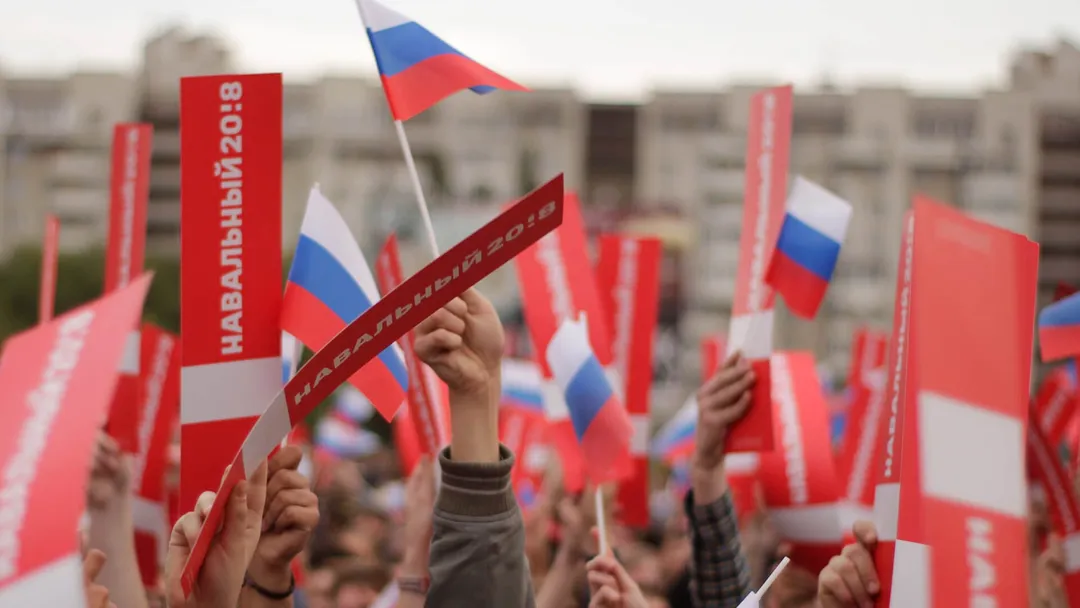
Alexei Navalny's Presidential Platform
This platform reflects Alexei Navalny’s views and convictions on the key challenges facing Russia’s development. During his many trips across the country, Navalny saw which issues concern people most of all. With the help of experts, he outlined approaches to solving these problems.
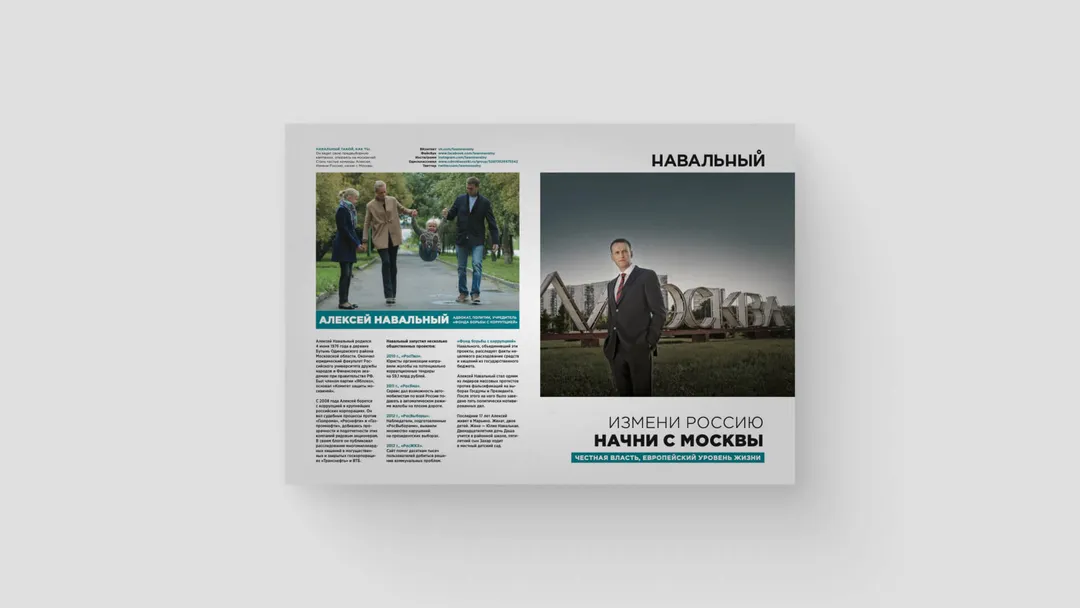
A3 flyer: "Change Russia—Start with Moscow"
Court verdict in the case of “creating an extremist community”
The 2023 verdict in the case concerning the ‘creation of an extremist community’. The fabricated charges were based on the activities of the Anti-Corruption Foundation, Navalny Headquarters and Alexei Navalny’s political projects, which the authorities designated as ‘extremist’; in this case, Navaln
ECHR Judgment on the Refusal to Initiate a Criminal Investigation into the 2020 Poisoning
ECHR judgment on a complaint concerning the Russian authorities’ refusal to investigate the poisoning of Alexei Navalny. The case focused on the state’s failure to carry out an effective investigation into the assassination attempt using Novichok and to identify those responsible.
Court verdict in the case of “fraud and contempt of court”
The 2022 verdict in the case of “fraud and contempt of court.” The fabricated charges alleged that Navalny had stolen donations collected for political projects, while the contempt of court count was tied to his statements during the trial in the “defaming a veteran” case; the court sentenced him to
Court ruling on the appeal against the refusal to open a criminal case over the 2020 poisoning
A court decision upholding the refusal to open a criminal case into the poisoning of Alexei Navalny. It cemented the Russian authorities’ position: not to recognize the attempted assassination as a crime and not to conduct an effective investigation.
Court ruling on the appeal against the response of the Main Military Investigative Directorate of the Investigative Committee regarding the application to open a criminal case over the 2020 poisoning
Ruling on the complaint against the refusal of the Main Military Investigative Directorate of the Investigative Committee to investigate the possible role of security service personnel in the poisoning. The court did not require the agency to examine this version within the criminal case, even thoug
Court ruling on the appeal against the response of the Investigative Committee’s regional investigative directorate to the application to open a criminal case over the 2020 poisoning
Court ruling on the complaint against the actions of the investigative directorate that reviewed the poisoning materials. The court did not require investigators to open a criminal case, and the inquiry once again remained at the level of formal checks.
Verdict in the “veteran defamation” case
Verdict in the “veteran defamation” case. The case was triggered by Navalny’s comment on a campaign video supporting the constitutional amendments, in which veteran Ignat Artyomenko appeared among many other participants; the trial became another episode of political pressure after Navalny’s return
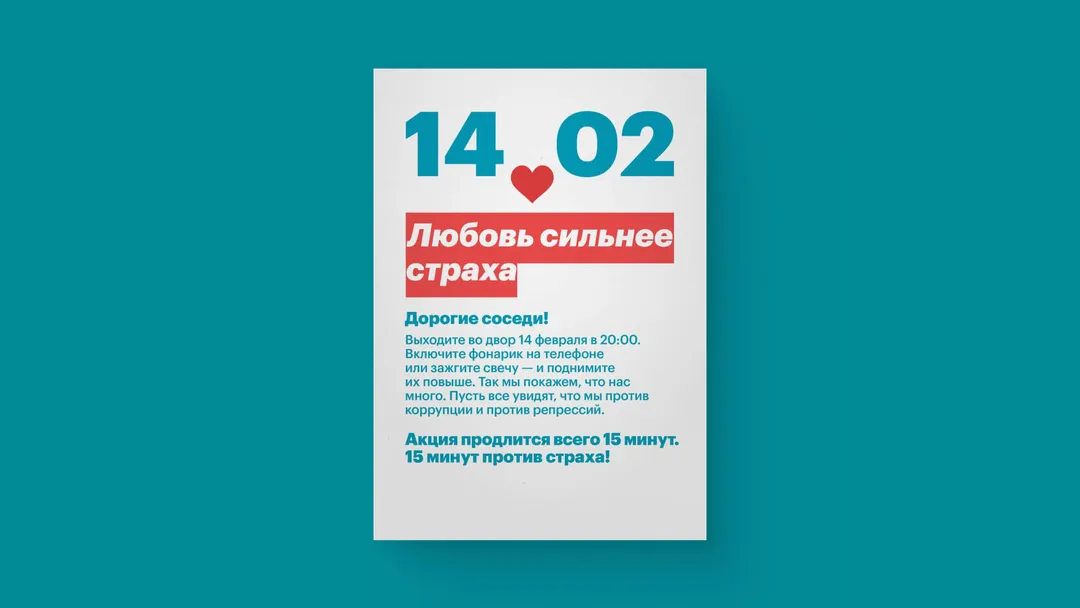
Leaflet: Love Is Stronger Than Fear”
Decision refusing to open a criminal case into the 2020 poisoning
Decision refusing to open a criminal case into the poisoning of Alexei Navalny. Despite medical evidence, international expert examinations, and public investigations, the Russian authorities refused to recognize the attempted murder as a crime and to search for those responsible.
The Simonovsky District Court ruling replacing the suspended sentence in the Yves Rocher case with a custodial sentence
The decision by which Alexei Navalny’s suspended sentence in the Yves Rocher case was converted into a custodial sentence. The formal pretext was alleged failures to report to the penal inspection service, even though Navalny was in Germany undergoing treatment and rehabilitation after being poisone
Khimki City Court ruling extending the period of detention in custody in the Yves Rocher case
A ruling by the Khimki City Court issued after Alexei Navalny returned to Russia in January 2021. The authorities used an old suspended sentence from the Yves Rocher case to detain Navalny immediately after his treatment for poisoning and keep him in custody.
Court ruling on the appeal against the FSB’s response to a request to open a criminal case over the 2020 poisoning
Court ruling on the complaint against the FSB’s response to the poisoning report. The court did not require an inquiry into the possible involvement of the special services (security services) and upheld the agency’s refusal.
Application to the Main Military Investigative Directorate of the Investigative Committee to open a criminal case regarding the 2020 poisoning
An appeal to the Main Military Investigative Directorate of the Investigative Committee demanding an inquiry into whether members of the security services were involved in the poisoning. The application was important because investigations by Navalny himself and by independent media pointed to the i
Response from the West Siberian Transport Investigative Directorate of the Investigative Committee to the request to open a criminal case regarding the 2020 poisoning
Response from the West Siberian Transport Investigative Directorate of the Investigative Committee to the complaint about the poisoning of Alexei Navalny. This body was involved in reviewing the events following the plane’s emergency landing in Omsk, but instead of opening and investigating a crimin
FSB response to the request to open a criminal case over the 2020 poisoning
The FSB’s response to the appeal regarding the poisoning of Alexei Navalny. The agency declined to open a criminal case or examine the possibility of involvement by intelligence service personnel, despite international findings that the Novichok nerve agent was used.
Application to the FSB to open a criminal case regarding the 2020 poisoning
Application to the FSB demanding an investigation into the circumstances of Alexei Navalny’s poisoning. The application was important because on 06.10.2020, the OPCW issued a report according to which the analyses carried out confirmed the presence in Navalny A.A.’s biomaterials of signs of poisonin
Court ruling on the appeal against the Investigative Committee’s response to the request to open a criminal case over the 2020 poisoning
Court ruling on the complaint about the Investigative Committee’s inaction following the poisoning report. The court did not require the agency to conduct an inquiry and open a criminal case, thereby upholding the refusal to investigate the attempted assassination of Navalny.
The Investigative Committee’s response to the request to open a criminal case regarding the 2020 poisoning
The Investigative Committee’s response to the demand to open a criminal case into the poisoning of Alexei Navalny. Instead of investigating the attempted murder, the agency effectively reduced the matter to the forwarding of materials and the issuing of formulaic replies, without recognising the inc
Application to the Investigative Committee to open a criminal case over the 2020 poisoning
The first application seeking the initiation of a criminal investigation into the poisoning of Alexei Navalny as an attempted murder and an attack on the life of a public figure.
Order to conduct searches and arrests in the FBK case
Order to conduct searches and arrests in the ACF case. As part of this campaign of persecution, security forces carried out searches, seizures, and detentions to paralyze the organization’s work and intimidate people associated with Navalny.