A very telling and sad story was discussed yesterday at the Board of Directors meeting of "Aeroflot." A perfect illustration of "manual control and bureaucratic efficiency."
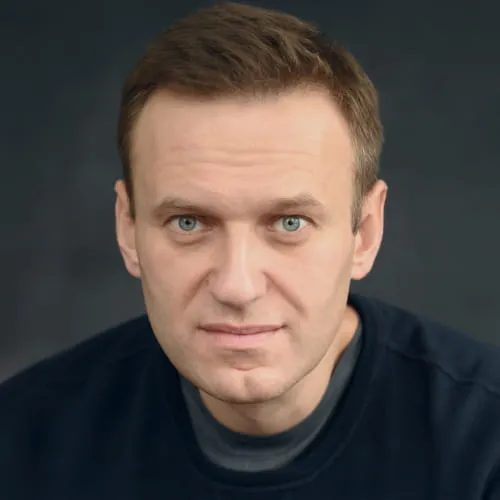
Aeroflot bought Boeing 777-300ER aircraft. This is currently the best-selling version of the 777. Several hundred of them are in service around the world. So here’s the story: the first one (the one in the photo) was supposed to make its inaugural ceremonial commercial flight today. To Bangkok. 402 people bought tickets. Those 402 people will, of course, still fly to Bangkok, but on two other aircraft with smaller capacity. And the brand-new Boeing 777-300ER will remain standing sadly on the tarmac. And it’s not just that it will be standing there sadly—it will be spreading sadness all around, because every day the aircraft sits idle costs Aeroflot $50,000 in losses. How is that even possible? Simply because the idiots at Rosaviatsia (Russia’s Federal Air Transport Agency) and the MAK (Interstate Aviation Committee) are tossing certification paperwork for the new aircraft back and forth, and the only result of this paper-shuffling is that there is still no certificate. In our country, nothing can fly, shoot, heal, feed, quench thirst, or run on any number of legs without a bureaucrat’s Big Round Stamp saying: APPROVED. And Boeing, which under the contract is supposed to handle the certification, submitted all the documents back on April 12. No response. The officials simply don’t care—about Boeing, the passengers, Aeroflot, Aeroflot’s losses, or the fact that hundreds of these aircraft are already flying all over the world. They still won’t issue our homespun Russian certificate. Kommersant covers this story in fairly detailed fashion, with dates. There is one curious detail that nobody is writing about, but which turns this whole story into complete idiocy: identical aircraft operated by foreign airlines land at Sheremetyevo perfectly successfully. In other words, for example, Rosaviatsia and the MAK have absolutely no objection to one of Emirates’ 80 Boeing 777-300ERs flying from Dubai to Moscow, but an identical Aeroflot Boeing is somehow not allowed to fly from Moscow to Dubai. FIRST GET A PIECE OF PAPER FROM US. We don’t want to issue it, we won’t explain why, but we still insist that you obtain it from us. And good luck proving anything to them. Of course, as Kommersant reminds us, the head of the MAK, Anodina, is a shareholder in Transaero and the mother of that company’s CEO. But it should also be understood that Aeroflot is no stranger to, uh, administrative leverage. Its board includes various ministers and deputy ministers, and even one friend of Putin’s (not me, just to be clear), and 51% of its shares are state-owned. There is also the main instrument of governance inherited from the USSR and modern Russia—the special secure hotline, the "vertushka"—into which one can shout: "Petrovich, what the hell are you doing, you bastard? You’re killing me here. My targets are going up in flames. I’ve got trucks full of bitumen that need unloading. I settled everything with Mikhail Stepanych at the planning meeting. You’re sabotaging this! I’m going to complain about you to the ministry!" Or whatever it is people usually shout into the vertushka. And still—nothing. It doesn’t work. Not the vertushka, not Putin’s friends, not the ministers and deputy ministers, not the hordes of MAK officials, not the hordes at Rosaviatsia, not the legions in the Transport Ministry, not the five flashing official beacons, not the thirty bodyguards, not the sixty Mercedes bought for government needs, not the 34 kilograms of correspondence, and not the two sobbing secretaries. Meanwhile, the new Boeing 777-300ER is standing on the tarmac, generating $50,000 in losses per day. Of that, $25,500 is what you and I pay every single day as the owners—through the state—of 51% of Aeroflot’s shares. And by the way, tomorrow it will reach what Russia’s Investigative Committee calls an "especially large amount." That means both the state and Aeroflot’s private shareholders will have suffered damages on an especially large scale. Will those damages be compensated by the wonderful officials from the MAK and Rosaviatsia? I doubt it. What nanotechnology? What modernization? What innovation, and what "Skolkovo" (Russia’s state-backed innovation hub)? At this point, it’s not even that we can’t build things properly—we can’t even buy them and use them properly. And there is only one explanation. And the key to it is this official photograph of the leadership of Rosaviatsia, the MAK, and, really, just about any Russian official:
Even when one official is dealing with another official, the expression on the face does not change.